Record wealth. Growing dependence on markets. The Allianz Global Wealth Report 2026 examines why financial resilience may become an increasingly important component of retirement security.
Key takeaways
- Record wealth rests on a narrow foundation. American households hold far more in equities than other advanced economies. That exposure has fueled extraordinary growth, but it also leaves retirement outcomes increasingly dependent on the performance of a single asset class.
- The gains are not evenly shared. The top 10% of U.S. households holds 68% of total net household wealth and more than half of defined contribution (DC) pension entitlements, capturing a disproportionate share of market-driven wealth creation.1
- Hidden risks may be growing beneath the surface. A small group of AI-driven technology companies has accounted for an outsized share of recent market gains, increasing the extent to which retirement outcomes depend on a limited set of market leaders.
The retirement security question behind record wealth
The Allianz Global Wealth Report 2026 paints a picture of remarkable financial success. U.S. households now hold more financial wealth than any other country, with gross financial assets reaching €121.4 trillion.2 Net financial assets per capita totaled €296,940, the highest level among major economies.3
Yet the report also raises an important question for the retirement industry: Does greater wealth necessarily translate into greater retirement security?
The findings suggest not always. The same forces that have driven unprecedented wealth creation are increasingly concentrating retirement outcomes around a relatively narrow set of drivers:
- Equity market performance
- Capital ownership
- Valuation gains
As a result, measures of wealth may paint a more optimistic picture than measures of financial resilience, particularly for households whose retirement outcomes remain closely tied to market performance.
Wealth creation is increasingly driven by markets, not savings
Between the end of 2022 and the second quarter of 2026, U.S. household gross financial assets grew by 42%, or approximately $45 trillion.1 But this story is not primarily about stronger savings habits. It is largely a story about capital markets.
The report highlights:
- Globally, four out of every five euros of new wealth came from valuation gains rather than fresh savings.4
- In North America, annual savings averaged just 2.1% of existing assets in 2025, while valuation gains accounted for 71% of financial asset growth.4
- By comparison, in Western Europe, valuation gains accounted for just 36% of growth despite a similar savings rate of 2.4%.4
This distinction matters for the U.S. retirement system. Savings behavior remains within an individual's control; market returns do not. As valuation gains become a larger driver of wealth creation, retirement outcomes for U.S. savers become increasingly influenced by factors outside participants' direct control.
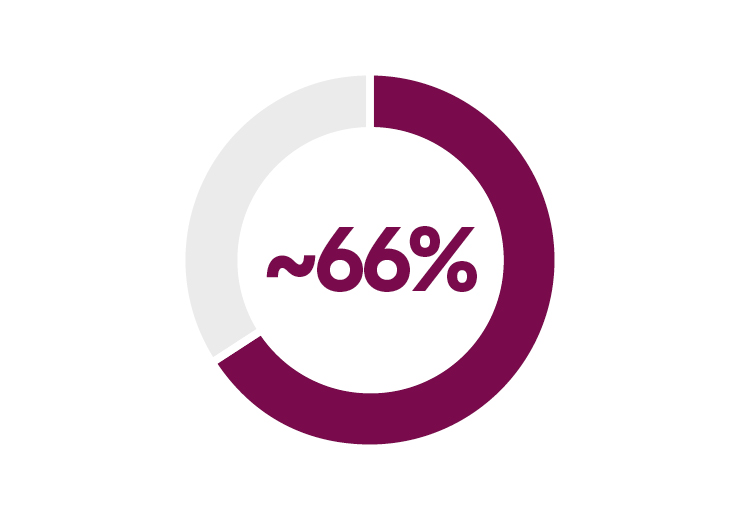
In the U.S., equities, mutual funds, and retirement assets now account for two-thirds (66.6%) of household financial savings.1 This level of exposure exceeds both the historical U.S. average and that of most other developed economies.